
If you want an seo post that ranks faster than your current scattershot drafts, structure is the lever most teams miss. This guide delivers a single, repeatable blueprint with exact roles for H1/H2/H3, word counts by intent, an on-page checklist, an internal-linking playbook, and a 90-day measurement plan you can run. Use it to match search intent, build topical authority, and shorten the time from publish to meaningful organic traffic.
Why article structure speeds up ranking
Direct effect: a deliberate article structure reduces friction for both crawlers and humans, and that dual reduction is why properly built pages often surface faster. Clear H1/H2/H3 roles let search engines parse topic boundaries, while short, purposeful sections keep readers on page and turn engagement into measurable ranking signals.
Crawl efficiency: when a page uses logical headers and internal anchors, search bots spend less time guessing topic scope and more time indexing content depth. Practical consequence: well-structured posts are more likely to have their new sections indexed on the next crawl instead of languishing in the queue.
How structure maps to ranking signals
- H1 and title relationship: H1 should be unique and reflect the page promise while the title tag targets CTR and query matching; both are interpreted together by the indexer.
- Concise H2 answers: short H2s that directly answer subqueries increase the chance of capturing featured snippets and People Also Ask boxes as shown in Backlinko research.
- Microformat and schema placement: placing a short FAQ under an H2 and applying FAQPage JSON-LD makes rich result eligibility explicit to crawlers — follow Google Search Central for implementation rules.
- Table of contents and anchors: improves user scannability and generates jump-to links in SERPs for long posts, which increases CTR for informational intent.
Trade-off to watch: obsessing over header count or stuffing H2s with keyword variants creates noise and dilutes topical authority. Better rule: each H2 must serve a distinct user need. For mid-authority domains, pruning weak subtopics and deepening 3-4 primary sections wins more than fragmenting the page into many shallow headers.
Concrete example: a SaaS growth team restructured an existing seo blog post into clear H2 questions with 100-150 word direct answers and added FAQ schema; after internal links from two high-traffic guides, the page began showing in a People Also Ask box and reported higher impressions and clicks within 30 to 60 days. The content itself did not change radically — the structure did the heavy lifting.
Judgment: structure is not a substitute for backlinks or original research, but it is the fastest lever for accelerating indexation and early engagement signals. For teams with limited resources, invest in structural fixes first; they deliver predictable, repeatable gains while you build external authority.
Next consideration: validate that your structure matches intent before expanding length — mismatched structure magnifies waste, while aligned structure accelerates every other SEO signal you apply.
Frequently Asked Questions
Direct answers, not theory: this FAQ collects the tactical responses teams need when building a single seo post that must rank quickly — practical next steps, trade-offs to watch, and where to run controlled experiments.
How to use these answers
Use these as executable micro-tasks: treat each answer as a checklist item you can complete in an editing session. If an item requires measurement, schedule the test, pick the KPI, and lock in the date to re-evaluate.
| Question | Practical answer and next step |
|---|---|
| What should the first sentence of an seo post do? | Lead with the outcome. Open with one clear sentence that states the answer or value and includes the primary keyword within the first 100 words. Next step: edit your intro down to a single, scannable answer line. |
| How many H2s does a strong post need? | Three to seven is the working rule. Prioritize distinct user needs per H2—fewer, deeper sections beat many thin ones. Next step: collapse low-value H2s into fuller sections before expanding. |
| Is an FAQ block always necessary? | Only when it covers genuine long-tail gaps. If the Qs repeat body content, skip schema. Next step: add 3–6 unique questions and apply FAQPage JSON-LD only if answers are concise and non-redundant. |
| How fast will a well-structured post show movement? | Expect measurable signals within weeks, not days. Structure speeds indexation and early clicks, but domain authority and topical competition set the pace. Next step: track impressions and clicks in Google Search Console weekly. |
| What drives the largest immediate CTR change? | Title tag paired with meta description. Optimize both for clarity and intent. Next step: run a title rewrite A/B as a controlled update after two weeks. |
| How should I use internal links to speed indexation? | Contextual links from high-traffic, topically relevant pages work best. Use descriptive anchors. Next step: add two contextual links from existing guides within 14 days and document referral pages. |
| Can tools generate this exact structure automatically? | Yes, when configured correctly. Use a platform that outputs H1/H2 roles, FAQ suggestions, and JSON-LD so you can publish with minimal manual work. Next step: review the generated outline in how it works and adjust priorities before publish. |
Trade-off to understand: applying FAQPage schema can increase SERP real estate but also creates duplicate snippets if answers echo H2 content. That can reduce organic click-through for some queries. Only apply schema when the FAQ adds unique phrasing or targets queries not satisfied in the main body.
- Fast experiments to run: rewrite the title and meta, publish, then measure impressions/clicks at 14 days.
- Indexation push: add two contextual internal links from priority pages within two weeks and check crawl status in GSC.
- Content expansion: if average position stalls, expand the weakest H2 with examples, data, or a mini-case study and republish a minor update.
Do not equate more FAQ items with more visibility; quality, unique phrasing and alignment with uncovered search queries are what earn rich results.
Concrete example: an e-commerce content team used an automated outline to add three targeted FAQ Qs and FAQPage JSON-LD to a product category guide. They also inserted two contextual links from a high-traffic buying guide. Within about six weeks the page began appearing in a related rich result and organic clicks improved; the win came from targeted phrasing and link context, not sheer question count.
Judgment: the most common mistake is treating FAQs as SEO padding. In practice, limited, precise FAQs that capture uncovered long-tail language outperform long lists of generic questions. Focus on unique value and measurable tests.
Next actions: 1) Edit your intro to a single outcome sentence containing the primary keyword. 2) Choose 3–5 H2s to keep and expand; collapse the rest. 3) If adding FAQ schema, ensure answers are unique and add the JSON-LD. 4) Add two contextual internal links from top pages within 14 days and track changes in Google Search Console.
{
“@context”: “https://schema.org”,
“@type”: “BlogPosting”,
“mainEntityOfPage”: {
“@type”: “WebPage”,
“@id”: “https://magicblogs.ai/crafting-seo-post-exact-structure-rank-faster”
},
“headline”: “SEO Post Structure: Rank Faster with Proven Tips”,
“description”: “Discover the exact structure for crafting an SEO post that helps you rank faster. Boost your visibility with Magicblogs.ai’s expert guide.”,
“image”: [
{
“@type”: “ImageObject”,
“url”: “https://example.com/image.jpg”,
“caption”: “Close-up of a content editor screen showing an outlined seo post with labeled H1, H2, H3 blocks, FAQ schema snippet preview, and a highlighted People Also Ask capture; photo realistic, professional mood”
},
{
“@type”: “ImageObject”,
“url”: “https://example.com/featuredimage.jpg”,
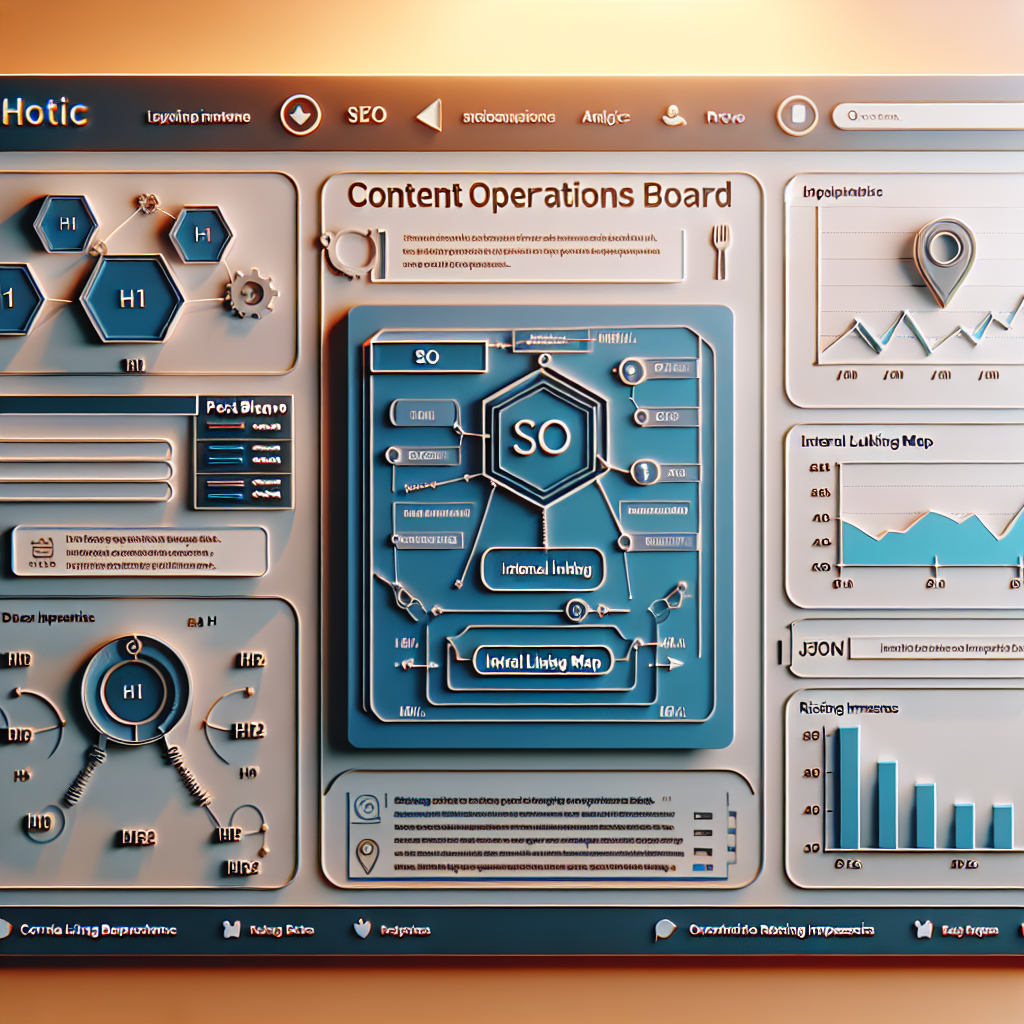
“caption”: “A content operations board photo showing an seo post blueprint: labeled H1/H2/H3 blocks, a sidebar with internal linking map, a small JSON-LD snippet preview, and an analytics dashboard displaying rising impressions; photo realistic”
}
],
“author”: {
“@type”: “Person”,
“name”: “Elisa”
},
“publisher”: {
“@type”: “Organization”,
“name”: “Magicblogs”,
“logo”: {
“@type”: “ImageObject”,
“url”: “https://magicblogs.ai/logo.jpg”
}
},
“datePublished”: “”,
“dateModified”: “”,
“@id”:”https://magicblogs.ai/crafting-seo-post-exact-structure-rank-faster#blogposting”
}
article blockquote,article ol li,article p,article ul li{font-family:inherit;font-size:18px}.featuredimage{height:300px;overflow:hidden;position:relative;margin-top:20px;margin-bottom:20px}.featuredimage img{width:100%;height:100%;top:50%;left:50%;object-fit:cover;position:absolute;transform:translate(-50%,-50%)}article p{line-height:30px}article ol li,article ul li{line-height:30px;margin-bottom:15px}article blockquote{border-left:4px solid #ccc;font-style:italic;background-color:#f8f9fa;padding:20px;border-radius:5px;margin:15px 10px}article div.info-box{background-color:#fff9db;padding:20px;border-radius:5px;margin:15px 0;border:1px solid #efe496}article table{margin:15px 0;padding:10px;border:1px solid #ccc}article div.info-box p{margin-bottom:0;margin-top:0}article span.highlight{background-color:#f8f9fb;padding:2px 5px;border-radius:5px}article div.info-box span.highlight{background:0 0!important;padding:0;border-radius:0}article img{max-width:100%;margin:20px 0}